A switch that feels warm, lights that flicker when the kettle goes on, or a circuit breaker that trips for no obvious reason – these are the sorts of issues that make an electrical safety inspection home owners often put off until later suddenly feel urgent. In many Sydney homes, especially older properties across the North Shore and Northern Beaches, electrical systems have been added to, patched up, and pushed harder than they were ever designed for.
That does not always mean there is a major fault. But it does mean small warning signs are worth taking seriously. A proper inspection gives you a clear picture of how safe your installation is, whether it meets current standards, and what should be repaired, upgraded, or monitored before it becomes a bigger problem.
Why an electrical safety inspection home owners book is worth it
Most people do not think about their wiring until something stops working. The challenge is that electrical problems often build quietly in the background. Loose connections, ageing switchboards, damaged outlets, overloaded circuits, and missing safety switches can sit unnoticed for years.
An inspection is not just about finding faults. It is about reducing risk and removing guesswork. For homeowners, that can mean greater confidence that your family, tenants, or visitors are not exposed to avoidable electrical hazards. For landlords and property managers, it also helps show due care has been taken to keep a property safe and well maintained.
There is also a practical side. Catching an issue early is usually simpler and less disruptive than dealing with a failed circuit, damaged appliance, or emergency call-out later. If you are planning renovations, installing an EV charger, adding air conditioning, or updating kitchen appliances, an inspection can also tell you whether your current electrical setup is ready for the extra load.
What electricians check during an electrical safety inspection home visit
A thorough inspection should be methodical, not rushed. The goal is to assess the overall condition of the electrical installation and identify any clear safety risks, signs of wear, or compliance concerns.
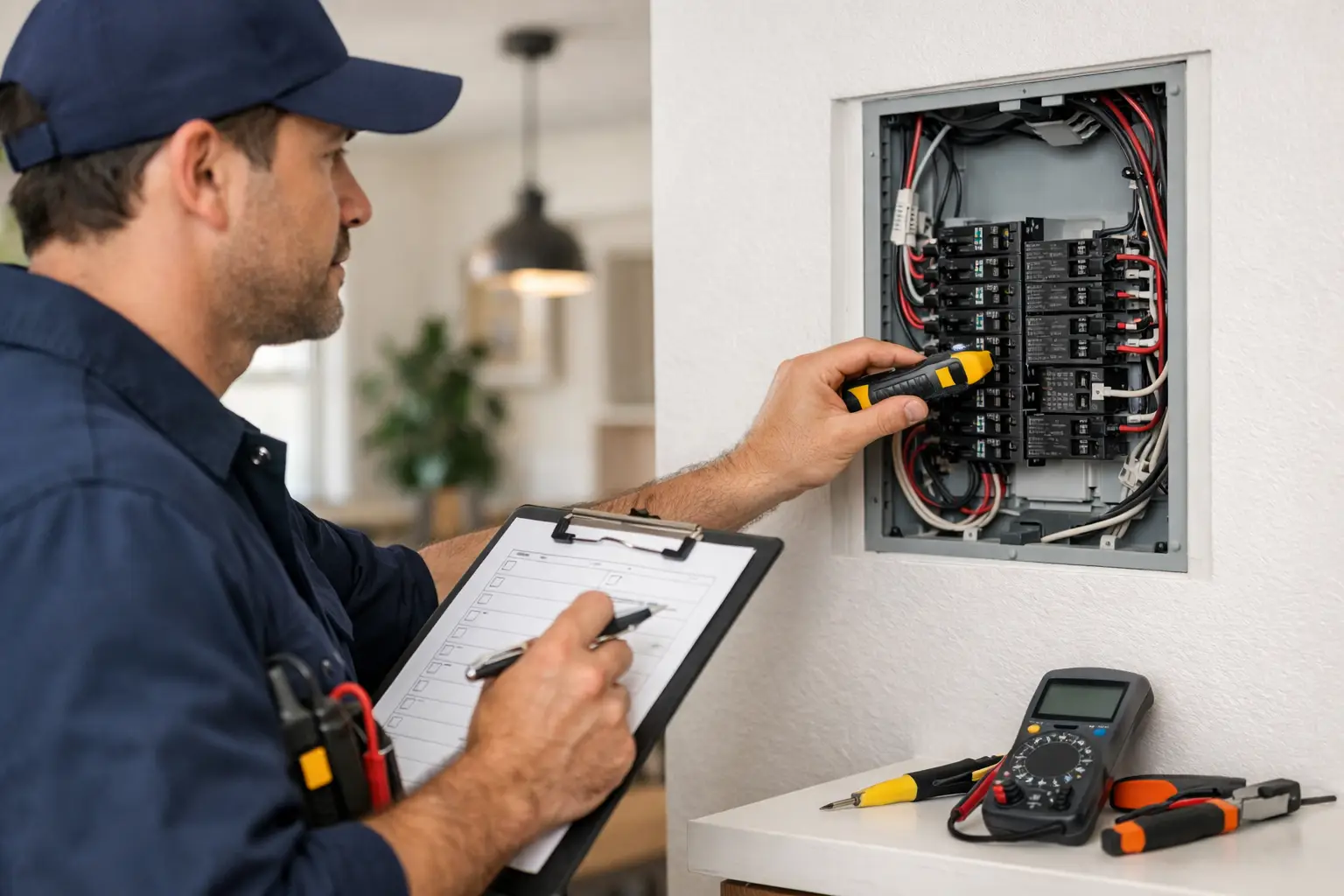
In most homes, the first place an electrician looks is the switchboard. This is often where older systems start to show their age. Ceramic fuses, limited circuit separation, poor labelling, or the absence of modern safety switches are all signs that a switchboard may need attention. If the board has already been upgraded, the electrician will still check that protective devices are installed correctly and operating as they should.
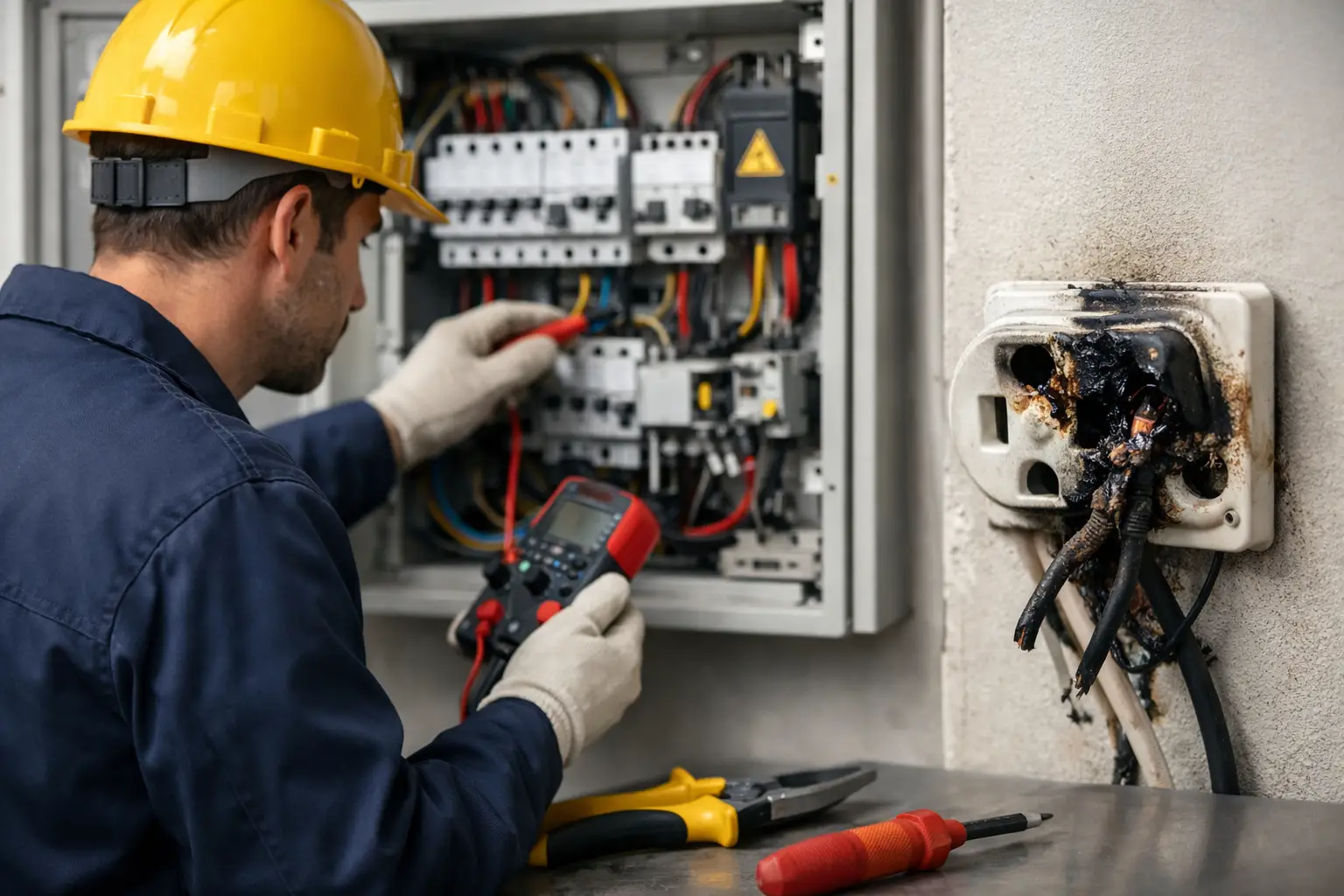
Power points and switches are another important part of the inspection. Cracked plates, scorch marks, loose fittings, buzzing sounds, or heat around a switch can all point to underlying faults. The same goes for light fittings, particularly in older homes where original wiring or previous DIY work may still be in place.
Cabling is assessed where accessible, especially in roof spaces, under floors, or around recent renovations. Not every cable in a home can be visually inspected without invasive work, so this is one of those areas where it depends on the property. A good electrician will be upfront about what can be checked on the day and what may need further investigation.
Testing also matters. A visual check alone is not enough. Safety switches should be tested, polarity and earthing may be verified, and selected circuits can be examined to confirm they are functioning safely. In rental properties or commercial settings, testing requirements may be more formal, but even for owner-occupied homes, proper testing adds an extra layer of reassurance.
Signs your home should be inspected sooner rather than later
Some homes benefit from routine inspections every few years, but others should be checked as soon as practical. Age is one factor. If your home is several decades old and the wiring or switchboard has not been assessed in a long time, it is sensible to have it looked over.
Recent changes to how you use power are another. A house that once had a television, a fridge, and a few lamps might now be running multiple air conditioners, home office equipment, induction cooking, pool gear, smart devices, and an EV charger. Even if everything appears to be working, the electrical system may be under more strain than before.
There are also the obvious warning signs. Frequent tripping, flickering lights, shocks or tingles from appliances, burning smells, discoloured outlets, or repeated lamp failures are not things to monitor casually. They should be checked by a licensed electrician.
If you have bought an older property, are preparing to lease one out, or are planning a renovation, an inspection is also a smart step. It is much easier to make safe, well-planned upgrades before walls are closed up or new finishes go in.
Older Sydney homes need a different level of attention
Across suburbs like Mosman, Neutral Bay, Manly, and Dee Why, many properties have had multiple rounds of additions and improvements over the years. That is common, but it can create a patchwork electrical system. You might have part of the home rewired, another part still on ageing cabling, and a switchboard that has been modified more than once.
That does not automatically mean the installation is unsafe. Plenty of older homes are in good condition because they have been upgraded properly over time. The key is not to assume. A licensed inspection helps separate cosmetic age from actual electrical risk.
Renovated homes can be similar. A beautiful kitchen or bathroom does not tell you much about what was done behind the walls. If the renovation was completed years ago, or if paperwork is limited, an inspection can help confirm that the visible finish matches the standard of the electrical work underneath.
What happens if issues are found
This is where experience and communication matter. Not every fault is an emergency, and not every recommendation means a full rewire. A good electrician should explain what is unsafe, what is outdated, and what is simply worth planning for.
For example, a missing safety switch on a power circuit may be a high-priority upgrade. A cracked switch plate may be a straightforward repair. An older switchboard may still be operating, but if it lacks modern protection and spare capacity, replacing it could be the safer long-term choice, especially before installing major new appliances.
The best outcome is clarity. You should understand what needs immediate action, what can be scheduled, and what the likely costs and benefits are. That is the difference between a helpful inspection and one that just leaves you with more confusion.
Choosing the right electrician for a home safety inspection
This is not a job for guesswork or vague advice. Your electrician should be licensed, experienced in residential work, and willing to explain findings in plain language. Punctuality, tidy work, and clear communication are not extras either. They matter, especially when someone is inspecting the safety of your home.
For local homeowners, working with a trusted team that understands the housing stock in the North Shore and Northern Beaches can be a real advantage. Older brick homes, renovated semis, modern apartments, and coastal properties all come with different electrical patterns and common issues. A local electrician who sees those property types every week is more likely to spot risks quickly and recommend practical solutions.
That is where a service-first approach makes a difference. At Bright Choice Electrical, the focus is not just on identifying faults. It is on helping customers understand their options, feel confident about the work, and know their home is being treated with care.
A safety inspection is not just for problem homes
One of the biggest misconceptions is that inspections are only for houses with obvious faults. In reality, many people book them because nothing dramatic has happened yet and they want to keep it that way. That is a sensible approach.
If your home is older, your power needs have changed, or you simply want peace of mind, a professional inspection can be a very practical step. It gives you a clearer idea of your home’s condition now, not after something fails.
When electrical work is safe, compliant, and properly maintained, it tends to stay in the background where it belongs. And for most homeowners, that quiet confidence is exactly the point.