
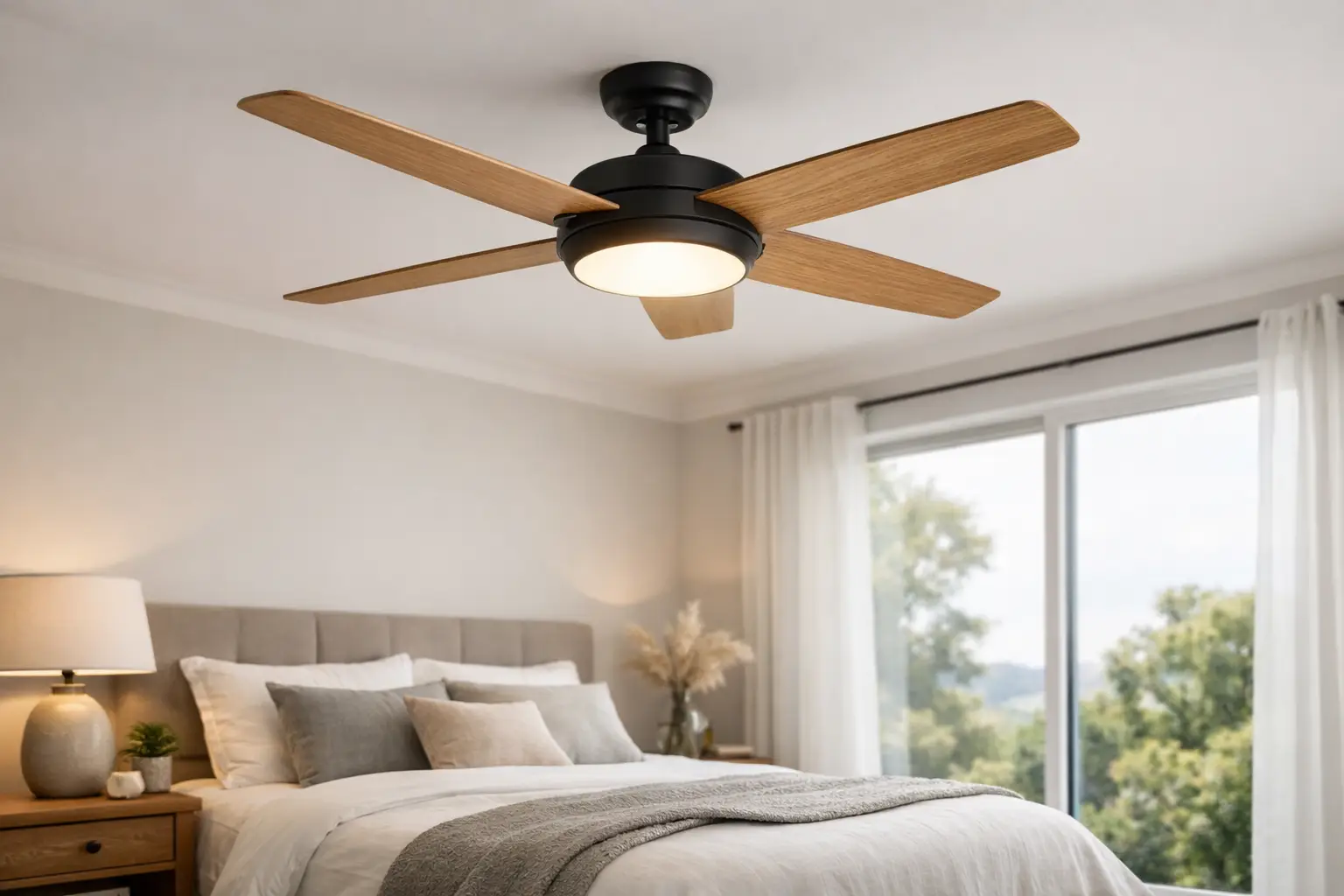
A bedroom fan can make the difference between a restless summer night and proper sleep, but not every model suits the way Australian homes are built. If you are looking for the best ceiling fan for Australian bedrooms, the right choice usually comes down to five things – quiet operation, the right size, good airflow, safe installation, and features you will actually use.
In Sydney homes, we see all sorts of bedroom setups. Older federation homes often have higher ceilings and trickier wiring. Newer apartments can have limited ceiling space and stricter strata rules. Family homes in the North Shore and Northern Beaches often need a fan that handles humid evenings without turning the room into a wind tunnel. That is why the best option is rarely about picking the most expensive fan on the shelf. It is about matching the fan to the room.
What makes the best ceiling fan for Australian bedrooms?
For a bedroom, quiet performance matters more than almost anything else. A fan might move plenty of air, but if it hums, rattles or clicks through the night, it stops being a comfort upgrade and becomes another problem to fix. Good bedroom fans are designed with balanced blades, quality motors and stable mounting, which all help reduce noise.
Airflow is the next big factor, but bigger is not always better. In a bedroom, you want enough air movement to feel cooler and more comfortable, not a strong draft blasting the bed all night. A fan that is oversized for a smaller room can feel unpleasant, especially if the ceiling is low. On the other hand, a fan that is too small for a main bedroom will often have to run at higher speeds, which can create more noise and still not deliver the comfort you want.
Energy efficiency also deserves attention. Many homeowners choose ceiling fans because they are far cheaper to run than air conditioning. That is especially true with DC motor fans, which are popular in bedrooms because they usually use less power and operate more quietly. They also tend to offer more speed settings, which gives you finer control at night.
Then there are the practical details people often overlook – light kits, remote controls, wall controls and ceiling height. A fan with a built-in light can be a smart option if the room has limited lighting points, but the style of light and brightness matter. In some bedrooms, a separate light fitting and a fan without a light can look cleaner and work better.
Bedroom fan size matters more than most people think
Choosing the right diameter is one of the simplest ways to avoid disappointment. For smaller bedrooms, a fan around 1200mm often works well. For larger bedrooms or master suites, 1300mm to 1400mm may be more suitable. Once rooms get larger, especially open-plan spaces, the fan choice changes again.
The ceiling height changes the equation too. Standard ceilings in many Australian homes suit flush-mount or close-to-ceiling fans, but higher ceilings may need an extension rod so the fan sits at an effective height. If the fan is mounted too high, airflow at bed level can be weaker than expected. If it is too low, it can raise safety and clearance issues.
This is where local advice helps. A fan that looks right in a showroom or online photo may not suit the actual dimensions of your bedroom, the roof pitch above it, or the position of existing wiring.
DC vs AC motors in a bedroom
If you are comparing fan types, the motor is worth understanding. AC motor fans are common, proven and often more budget-friendly. They can be a solid choice when you want something simple and reliable.
DC motor fans are often the preferred option for bedrooms. They are typically quieter, more energy efficient and offer more speed settings. That makes them well suited to sleep spaces where a gentle, low-speed airflow is usually all you need overnight. They can cost more upfront, but many homeowners feel the quieter operation is worth it.
There is a trade-off, though. Not every home has the same wiring setup, and not every fan control arrangement suits every motor type. If you want wall controls, smart integration or a particular switching arrangement, it is worth checking compatibility before buying.
Features worth paying for – and ones that are optional
A remote control is one of the most useful bedroom fan features. Being able to adjust speed or switch the fan off without getting out of bed is a genuine convenience, not a gimmick. Reverse function is also valuable, even though many people only think about fans in summer. In winter, reverse mode can help circulate warm air more evenly, particularly in rooms with higher ceilings.
Dimmable LED light kits can be worthwhile if the bedroom needs a combined fan and light solution. Still, this depends on the room. If you already have good bedside lighting and a central light fitting that works well, a fan-only model may be the better choice visually.
Smart controls can appeal to some households, especially in renovated or newer homes. Scheduling, voice control and app access sound convenient, but they are not essential for everyone. In many bedrooms, a straightforward remote-controlled fan is the most practical and least frustrating option.
Ceiling fans bedroom buyers in Australia should avoid
The wrong fan is usually obvious after the first few nights. Common problems include noisy motors, wobbling blades, poor-quality remotes and fans that simply push air badly. Sometimes the issue is the product itself. Other times the problem is incorrect sizing or poor installation.
Very cheap fans can be tempting, especially in investment properties or quick cosmetic updates, but they often create trouble later. If a fan is badly balanced, made from lower-grade materials or fitted poorly, it can become noisy fast. Bedrooms are the least forgiving room in the house for that kind of issue.
It is also worth being careful with style-led choices. Timber-look blades, minimalist designs and low-profile housings can look excellent, but looks should not come ahead of airflow, noise performance and suitability for the room. The best fan is one you barely notice apart from the comfort it provides.
Installation matters just as much as the fan itself
Even a high-quality fan can disappoint if it is not installed properly. Secure mounting, correct support, safe wiring and proper balancing all affect how the fan performs. In Australian homes, installation can also involve checking ceiling structure, clearance, existing circuits and whether extra support is needed.
For bedrooms with older light points, replacing a standard light fitting with a ceiling fan is not always a like-for-like job. The electrical side needs to be checked properly, and the mounting point must be suitable for a fan, not just a light. That is one reason many homeowners choose a licensed electrician rather than risking a patch-up solution.
A clean installation also matters visually. In a bedroom, you do not want exposed damage, messy finishes or controls that feel awkward to use. The fan should look like it belongs there and operate reliably from day one.
So what should you choose?
For most Australian bedrooms, a quiet DC ceiling fan in the right size range is a strong choice. It suits the way bedrooms are used, keeps running costs down and usually offers better low-speed comfort overnight. If your room is smaller, stick with a fan that fits the proportions. If it is a larger main bedroom, step up the size rather than cranking a smaller fan to maximum every night.
If you need a light, choose one that gives pleasant bedroom lighting rather than harsh brightness. If you value simplicity, a remote-controlled model is often the sweet spot. And if you are renovating or upgrading several rooms, try to think about consistency across the home, not just the bedroom in isolation.
For homeowners across Sydney’s North Shore and Northern Beaches, the right fan is the one that suits your room, your ceiling height and how you actually sleep. A trusted local electrician can help you sort through the options and install it safely, so you are not left guessing. At Bright Choice Electrical, that practical, straightforward approach is exactly what many customers want – clear advice, quality workmanship and a result that feels right from the first night.
A good bedroom ceiling fan should fade into the background: no rattles, no fuss, just steady comfort when the weather turns warm.