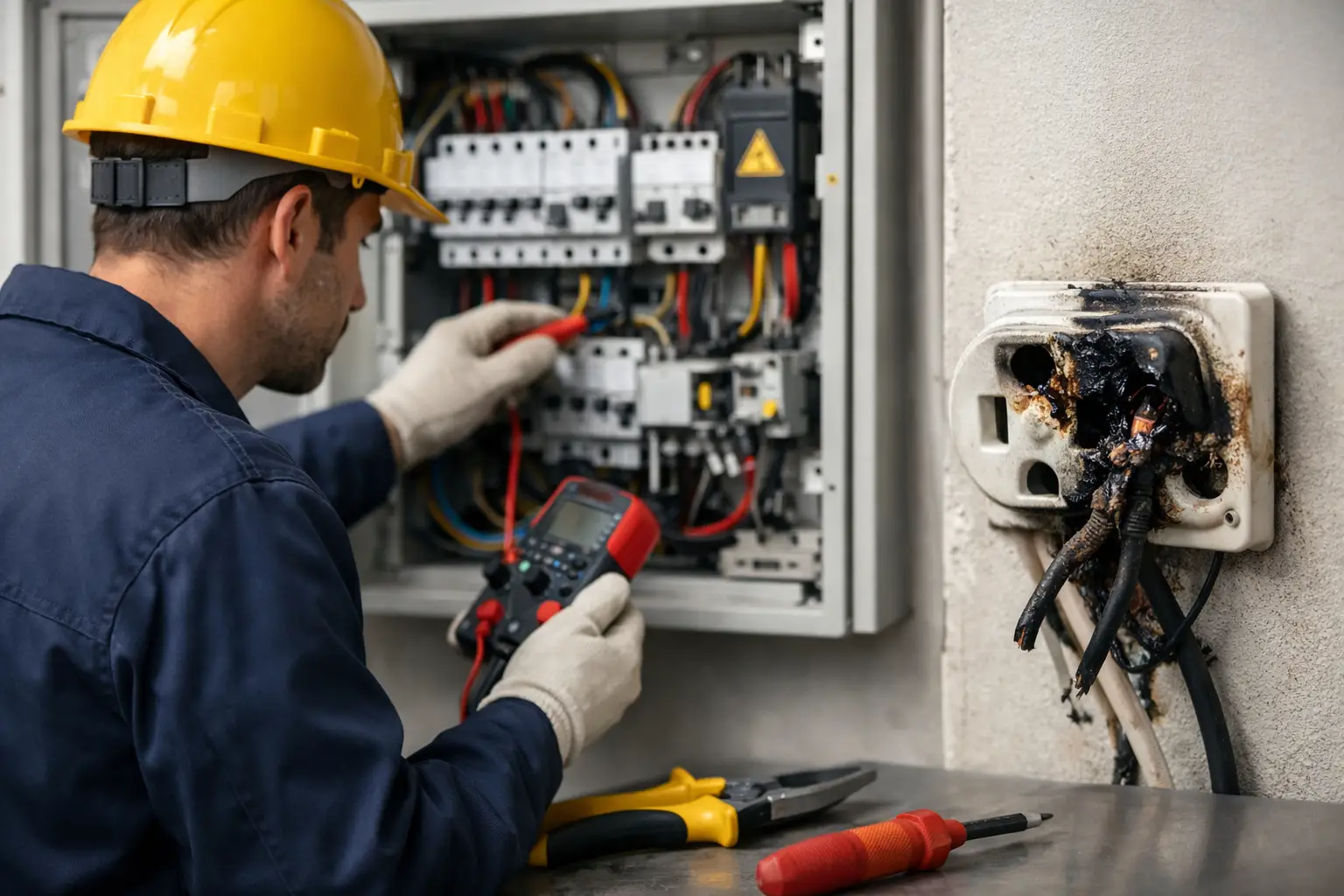
A light flickers when the kettle goes on. A powerpoint feels warm. The safety switch trips for no obvious reason. These signs of faulty house wiring are easy to brush off at first, especially in a busy home, but they can point to real electrical risks that should not be ignored.
Faulty wiring does not always announce itself with sparks or a dramatic power outage. More often, it shows up in smaller warning signs that build over time. For homeowners, landlords and business owners across Sydney’s North Shore and Northern Beaches, spotting those early clues can make the difference between a straightforward repair and a serious safety issue.
Why faulty wiring deserves quick attention
Electrical faults can affect more than convenience. They can increase the risk of electric shock, damage appliances, create recurring power problems and, in the worst cases, lead to electrical fires. Older homes are often more vulnerable, particularly if they have ageing cabling, outdated switchboards or DIY alterations done years ago.
That said, newer properties are not automatically in the clear. Poor workmanship, overloaded circuits, water ingress and damaged fittings can all create problems in more recent homes as well. Wiring issues are not always about the age of the property. Sometimes it comes down to how the system has been used, modified or maintained.
Common signs of faulty house wiring
Some warning signs are obvious. Others are subtle enough that people put up with them for months. If you notice one or more of the following, it is worth having the electrical system checked by a licensed electrician.
1. Circuit breakers trip often
A breaker that trips once after too many appliances are running on the same circuit is not unusual. A breaker that keeps tripping without a clear reason is different. Repeated tripping can mean the circuit is overloaded, a fault has developed somewhere in the wiring, or the switchboard protection is responding to a more serious issue.
It depends on the pattern. If it only happens when the toaster, microwave and kettle are all going at once, the circuit may simply be carrying too much. If it trips when very little is in use, there may be a deeper wiring fault that needs investigation.
2. Lights flicker or dim regularly
The occasional brief flicker can happen, particularly during storms or supply interruptions. But if lights flicker whenever an appliance switches on, or certain rooms seem to dim for no clear reason, that can point to loose connections, overloaded circuits or deteriorating wiring.
This is one of the most commonly missed signs because it is easy to get used to. In reality, lighting should be stable. If it is not, there is usually a reason.
3. Powerpoints or switches feel warm
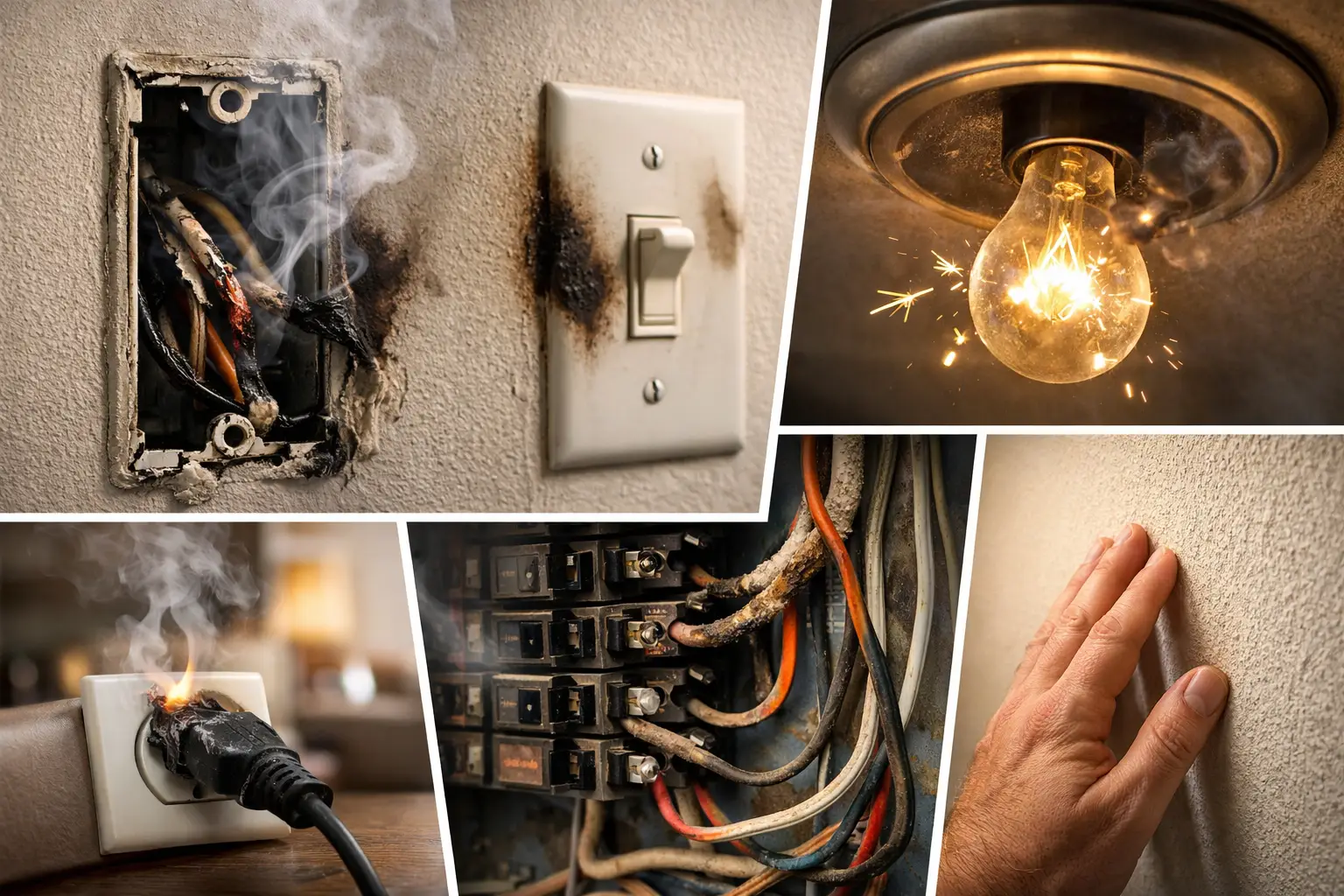
A switch or powerpoint should not feel hot to the touch. Warmth can indicate loose terminations, internal damage or excessive current draw. In some cases, discolouration around the plate can appear as well.
Heat is a warning sign worth taking seriously. Electricity moving through a poor connection creates resistance, and resistance creates heat. Left unchecked, that heat can damage the fitting further and increase the fire risk.
4. There is a burning smell or scorch marks
A faint burning smell near a switchboard, light fitting or outlet is never something to ignore. Neither are black marks, melted plastic or visible scorching. These signs suggest overheating or arcing, where electricity jumps across a gap instead of flowing properly through the circuit.
If you notice this, stop using the affected circuit or outlet and arrange urgent electrical attention. This is not the kind of issue to monitor and hope for the best.
5. Buzzing sounds from switches, lights or the switchboard
Most electrical systems operate quietly. A faint hum from some equipment can be normal, but buzzing or crackling from switches, lights, outlets or the switchboard is not. Noise often points to a loose connection, failing component or arcing fault.
Because the sound can come and go, some people dismiss it. If electrical fittings are making noise, they need checking.
6. You get mild shocks when touching appliances or fittings
Even a small zap from an appliance, light switch or tap near electrical equipment should be treated as a serious warning. People sometimes describe it as a tingle rather than a shock, but either way, it can indicate poor earthing, damaged wiring or a fault in the appliance or circuit.
Do not assume it is harmless because it was minor. Electrical faults can worsen quickly, and shock risks should always be assessed by a licensed professional.
7. Outlets stop working or work intermittently
A dead powerpoint does not always mean the whole house has a major wiring issue. Sometimes the problem is isolated to one outlet or one section of a circuit. But intermittent power, outlets that only work if a plug is held a certain way, or points that fail without explanation can all indicate wiring defects behind the wall.
This is especially relevant in older homes where fittings may have worn out or where connections have loosened over time.
8. The switchboard is outdated
One of the bigger signs of faulty house wiring is not always the wiring itself but the condition of the switchboard managing it. If the property still has ceramic fuses, lacks safety switches, or has an overcrowded board that has not kept up with modern electrical demand, the system may not be providing the protection it should.
An outdated switchboard does not automatically mean every cable in the house is faulty. But it often signals an electrical system that is due for a proper review, especially if the home has been renovated, extended or loaded up with newer appliances over the years.
9. You rely on extension leads because there are not enough powerpoints
This is not a wiring fault by itself, but it is a common warning that the electrical layout no longer suits how the space is used. Permanent reliance on double adaptors and extension leads can overload circuits and increase wear on older outlets.
In practical terms, this often shows up in home offices, kitchens and entertainment areas. If the system is constantly being stretched beyond what it was designed for, faults become more likely.
Older homes need extra attention
Many homes across established parts of Sydney’s North Shore and Northern Beaches have solid bones but ageing electrical infrastructure. If your property is several decades old and has never had a major electrical upgrade, it is worth being cautious.
Old insulation around wiring can become brittle. Previous renovations may have added new circuits to old systems. In some cases, unsafe materials or non-compliant work may still be hidden in ceilings or walls. None of that is meant to cause alarm, but it is a good reason not to ignore early warning signs.
What not to do if you notice a problem
It can be tempting to swap a fitting, reset a breaker repeatedly or keep using the least-bad powerpoint until someone gets around to looking at it. That approach usually makes things riskier, not cheaper.
Electrical faults are not always visible from the outside. A flickering light might be a loose fitting, or it might be a connection issue further back in the circuit. A tripping safety switch might be doing its job properly because there is a genuine fault present. Without testing, it is guesswork.
For that reason, DIY electrical repairs are never the right move. In Australia, this work must be carried out by a licensed electrician, and for good reason.
When to call a licensed electrician
If you notice repeated tripping, heat, burning smells, buzzing, shocks or signs of damage, call a licensed electrician as soon as possible. If there is smoke, active sparking or an immediate danger, isolate power if it is safe to do so and seek urgent help.
For less dramatic issues, timing still matters. Electrical faults rarely improve on their own. Early diagnosis can prevent property damage, avoid bigger repair costs and keep your household or workplace safe.
A good electrician will not just patch the symptom. They will test the circuit, identify the cause, explain what is happening clearly and recommend the safest fix. That is particularly important in homes with older switchboards, renovation work or growing power demands from air conditioning, induction cooking, home offices or EV charging.
For local property owners who want clear advice and safe, reliable workmanship, Bright Choice Electrical understands how to assess these issues properly and fix them without the usual run-around.
If something in your home’s electrical system feels off, trust that instinct. Small warning signs have a way of becoming bigger ones, and getting them checked early is one of the simplest ways to protect your home and the people in it.