
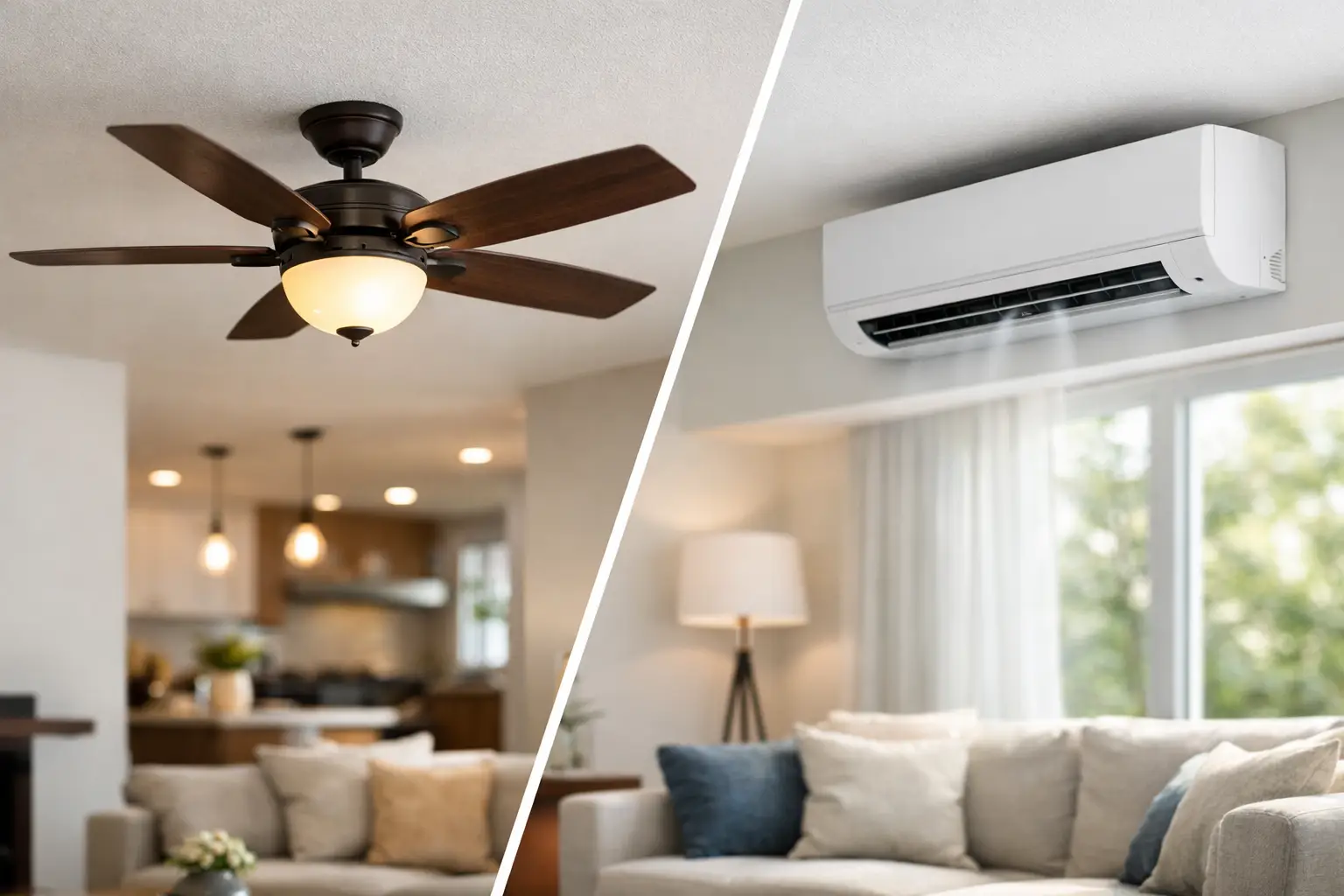
A stuffy bedroom at 10 pm and a soaring summer power bill can make the ceiling fan or aircon question feel a lot more urgent than theoretical. For many Sydney households, especially across the North Shore and Northern Beaches, the right answer comes down to how you use the room, how often you need cooling, and what kind of comfort you expect when the heat really sets in.
The short version is this: a ceiling fan and an air conditioner do different jobs. One moves air to help you feel cooler. The other actively lowers the room temperature. That sounds simple, but the better choice depends on your home, your budget, and whether you want everyday efficiency, stronger cooling, or a bit of both.
Ceiling fan or aircon: what is the real difference?
A ceiling fan does not cool the air itself. It circulates air across your skin, which helps sweat evaporate and makes the room feel more comfortable. That is why fans can be surprisingly effective in bedrooms, living areas, covered outdoor spaces and rooms that already get decent airflow.
Air conditioning works differently. It removes heat from the room and can bring the actual temperature down. If you are dealing with a western-facing bedroom, an upstairs room that traps heat, or a home office that becomes unbearable by mid-afternoon, aircon offers a level of control a fan simply cannot match.
That difference matters because comfort is not just about the thermometer. On a mild evening, a fan may be all you need. On a humid 34-degree day, especially in a room with poor insulation or lots of sun exposure, air conditioning will usually do the heavy lifting.
When a ceiling fan is the better choice
Ceiling fans are often the smarter choice when you want affordable day-to-day comfort without a big jump in running costs. They are well suited to rooms that do not overheat severely, homes where people prefer moving air while they sleep, and households trying to reduce reliance on air conditioning.
One of the biggest advantages is efficiency. Fans use far less electricity than air conditioners, which makes them attractive for long summer evenings or overnight use. If your goal is to stay comfortable without worrying every time the energy bill arrives, a quality ceiling fan can make a real difference.
They are also a good fit for open-plan spaces where you want air movement rather than refrigerated cooling. In many homes, that means the living room, alfresco area or family room gets more day-to-day benefit from a fan than from blasting aircon all afternoon.
There is also the installation side to think about. A properly installed ceiling fan is a clean, practical upgrade that can add comfort year after year with relatively low maintenance. The key word there is properly. Fans need secure mounting, correct wiring and the right positioning for safe, balanced operation.
Best rooms for a ceiling fan
Bedrooms are often ideal, especially for people who do not like sleeping in icy air but still want relief from stale heat. Living rooms, sunrooms and covered patios also suit fans well. In apartments or smaller homes, a fan can be a simple way to improve comfort without committing to a more expensive cooling system.
When aircon makes more sense
If your home gets genuinely hot, aircon is usually the more effective option. That applies to rooms with direct afternoon sun, poorly ventilated upstairs levels, commercial spaces where staff and customers need reliable comfort, or households with young children, older residents, or anyone sensitive to heat.
Air conditioning also gives you control. You can set a target temperature, cool the room quickly, and in many systems manage humidity more effectively than you can with a fan alone. For some homes, especially newer builds with sealed windows or renovated spaces that hold heat, that control is worth the higher upfront and running costs.
Another factor is how you use the room. A home office, for example, often needs consistent comfort through the hottest part of the day. A fan may help, but if you are on calls, working with equipment, or trying to focus in peak summer heat, aircon is usually the more dependable choice.
Best rooms for air conditioning
Bedrooms that stay hot into the night, home offices, enclosed living areas and shopfronts or small commercial premises often benefit most. If the room needs predictable cooling rather than occasional relief, aircon is usually the better fit.
Running costs: where the difference really shows
For many property owners, the ceiling fan or aircon decision comes down to cost. Not just installation cost, but what it costs to run over time.
Ceiling fans are much cheaper to operate. You can run them for hours with minimal impact on your bill compared with air conditioning. That makes them attractive for families, landlords and anyone trying to improve comfort in a cost-conscious way.
Air conditioners cost more to run because they are doing more work. They cool the air, draw more power and often run for longer in peak heat. That does not make them a poor choice. It just means they should be used where their stronger performance is genuinely needed.
A practical way to think about it is value rather than price alone. If a fan keeps a bedroom comfortable most of the summer, it may be the better investment. If a room becomes unusable without aircon, spending less on a fan will not solve the problem.
The best answer is often both
In plenty of Sydney homes, the smartest solution is not ceiling fan or aircon. It is ceiling fan and aircon.
Used together, they can improve comfort while helping reduce energy use. A fan helps circulate cooled air, which means you may not need to run the air conditioner as hard or set it as low. That can make the room feel comfortable faster and keep operating costs more manageable.
This combination works especially well in bedrooms and living areas. You get the strong cooling of aircon when needed, with the everyday efficiency and gentle airflow of a fan. For many households, that balance feels better than relying on one system alone.
What to consider before installing either option
The room itself matters more than people think. Ceiling height, roof structure, existing wiring, insulation, sun exposure and how the space is furnished all affect performance. A fan that is too small for the room or poorly placed will underperform. An air conditioner that is incorrectly sized can be inefficient, noisy or struggle to maintain temperature.
There is also the safety and compliance side. Electrical work should always be carried out by a licensed electrician, particularly when installing hardwired ceiling fans or upgrading electrical capacity to support new cooling equipment. In older homes, it is not uncommon to uncover outdated wiring or switchboard issues that need attention before installation can proceed safely.
That is where good advice matters. A reliable local electrician will look at the room properly, explain what is suitable, and help you avoid spending money on the wrong setup. Bright Choice Electrical often sees customers who were close to choosing based on price alone, only to realise the better option depended on how the space actually functioned.
So, which one should you choose?
If you want the most economical option for regular comfort, a ceiling fan is hard to beat. If you need real cooling power in hot or enclosed rooms, aircon is usually the right call. If you want comfort, flexibility and a smarter way to manage summer energy use, combining both is often the best result.
The right choice is the one that suits your home, not a generic rule. A cool coastal apartment in Manly may need something different from a family home in North Ryde with hot upstairs bedrooms and full afternoon sun. Once you look at the room, the way you live, and what level of comfort you actually need, the answer usually becomes much clearer.
If you are weighing up the options, it helps to think beyond the next hot day. Choose the setup that will keep your home comfortable, safe and practical for the long run.