
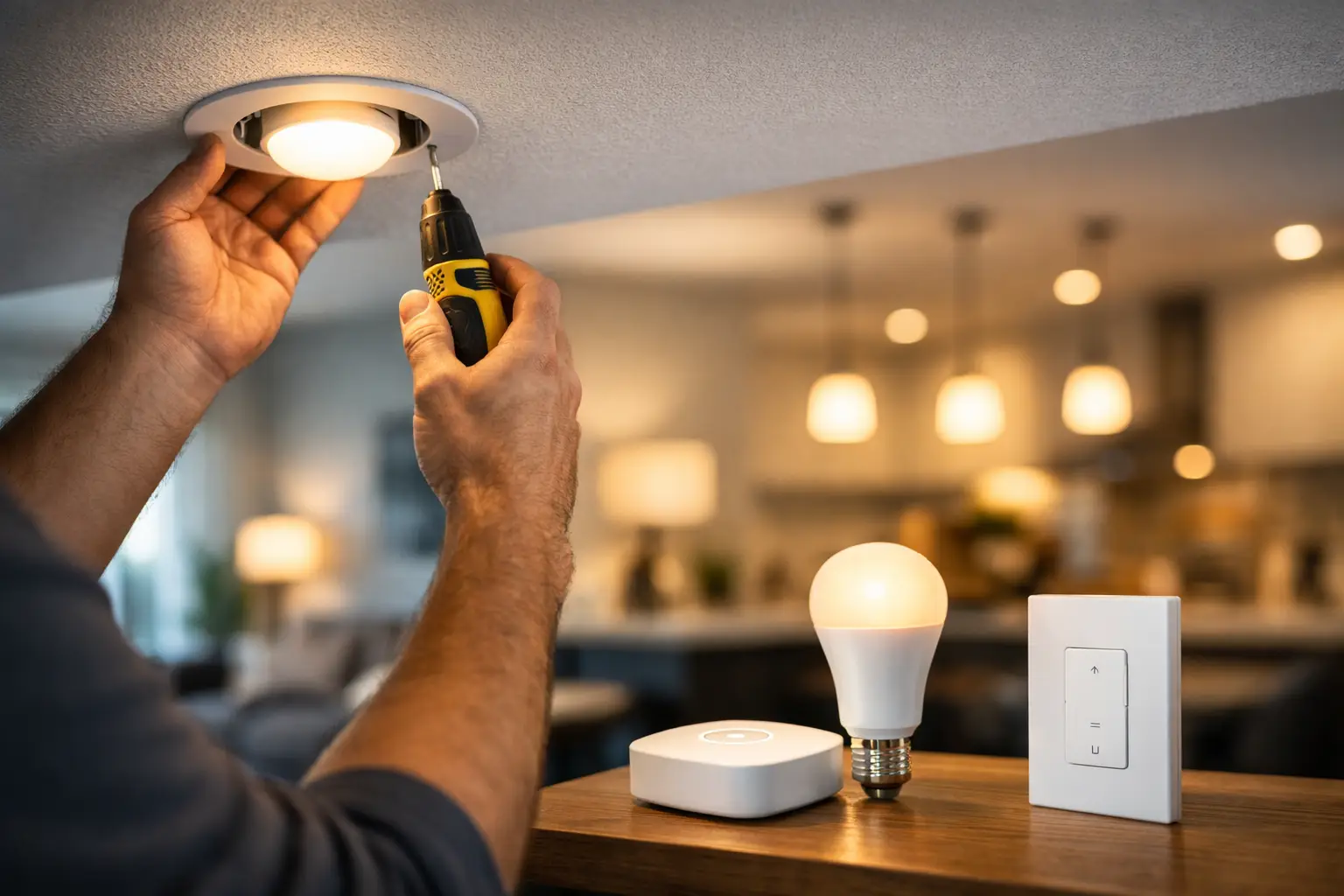
You usually notice bad lighting at the worst time – when one room feels too harsh at night, the hallway is dark when your hands are full, or a switch layout simply doesn’t suit the way your household actually lives. Smart home lighting installation fixes more than convenience. Done properly, it improves comfort, saves time, reduces wasted power and gives you better control over the spaces you use every day.
For many homeowners across Sydney’s North Shore and Northern Beaches, the appeal is simple. You want lights that respond properly, settings that make sense, and a system that feels easy to use rather than gimmicky. That means the installation matters just as much as the products themselves.
What smart lighting actually changes
At its best, smart lighting gives you control over when lights turn on, how bright they are, and how different areas of the home behave at different times of day. Instead of relying on a standard on-off switch in one location, you can build lighting around routines, safety and comfort.
That might mean the front path lights coming on automatically at dusk, kitchen lights dimming for the evening, or a bathroom light turning on softly overnight instead of blasting full brightness at 2 am. In family homes, it can also help reduce the daily back-and-forth of turning lights off in empty rooms or checking whether outdoor lights were left on.
For landlords and renovators, smart lighting can also add practical value. It can make a property feel more modern, improve liveability and support energy-conscious upgrades. But there is a difference between a few off-the-shelf smart bulbs and a properly planned system.
Smart home lighting installation starts with the wiring
This is where many people get caught out. A smart bulb from the hardware shop may work for a single lamp, but a full smart home lighting installation often involves switches, circuits, dimmers, sensors, app integration and the existing electrical setup in your home.
Older homes in areas like Mosman, Manly or Neutral Bay can have wiring arrangements that need a closer look before any upgrade goes ahead. Some homes have limited switch space, some have older fittings that are not compatible with smart dimming, and some renovations involve a mix of old and new wiring that needs to be handled carefully. It depends on the age of the property, the fittings you want to keep, and how much control you expect from the system.
A licensed electrician can assess whether your current setup suits hardwired smart switches, whether neutral wiring is available where needed, and whether the plan will work safely and reliably in day-to-day use. That step matters because the goal is not just to make the lights smart. It is to make them dependable.
Choosing the right setup for your home
There is no single best smart lighting setup for every property. The right option depends on your layout, budget and expectations.
Some households want a simple system with app control for selected rooms and a few schedules for outdoor lighting. Others want a broader setup with motion sensors, scene control, dimming, voice integration and grouped lighting across living areas, bedrooms and exterior zones. A busy family home may prioritise ease of use and safety. A renovated apartment may focus on space-saving switch options and clean presentation. A small business may want reliable after-hours control and lower energy use without disrupting staff.
The main trade-off usually comes down to flexibility versus simplicity. Smart bulbs are easy to trial, but they can be limited if someone switches the power off at the wall. Smart switches and hardwired controls are generally more practical for permanent use, but they require proper installation and planning. If you want the system to feel natural for everyone in the home, including guests and children, that is often the better path.
Where smart lighting delivers the most value
Not every room needs the same level of automation. The best results usually come from focusing on the areas where lighting habits are repetitive or where timing and convenience matter most.
Entry points, hallways and stairs
These are strong candidates for sensors and timed lighting. Automatic control can improve safety, especially at night or when carrying bags, laundry or children through the house. In multi-level homes, stair lighting is one of those upgrades that feels minor until you live with it.
Kitchens and living areas
These spaces benefit from layered lighting and scene control. Bright task lighting works well while cooking or cleaning, but a softer setting is often better for dinner, entertaining or winding down in the evening. Smart dimming helps one room serve several purposes without constant manual adjustment.
Bedrooms and bathrooms
In these rooms, comfort matters more than novelty. Scheduled lighting, bedside control and low-level night settings are often more useful than complex automation. A bathroom light that comes on gently during the night is a practical improvement, not just a tech feature.
Outdoor areas
Exterior lighting is one of the most worthwhile applications. Smart control can support security, improve visibility around pathways and entertaining areas, and avoid lights being left on longer than necessary. For homes near the coast, product selection also needs to account for conditions such as moisture and salt air.
Common mistakes to avoid
The biggest mistake is buying devices first and trying to work out the system later. That often leads to compatibility issues, awkward controls and a patchwork setup that becomes frustrating to use.
Another common problem is overcomplicating the plan. If every room has multiple app settings, voice commands and automation rules, the system can feel harder to live with rather than easier. Good smart lighting should reduce friction. You should still be able to walk into a room and use the lights without thinking about it.
Compatibility also matters more than many people expect. Not all fittings work well with smart dimmers. Not all products communicate reliably across different platforms. Wi-Fi based devices can be fine in some homes, while others may be better suited to a more integrated solution. It depends on the size of the property, the strength of the network and how many smart devices are already in use.
Finally, there is safety. Any work involving fixed wiring, switches or circuit changes should be handled by a licensed electrician. That protects the installation, the home and the people using it.
Why professional installation is worth it
A proper installation gives you more than functioning lights. It gives you a system that is safe, compliant and set up to suit the way the property is actually used.
That includes checking existing circuits, recommending compatible products, installing switches and controls neatly, testing the system and making sure the setup is straightforward for the household. It also means clear advice if part of your original plan is likely to create problems later.
For homeowners, that can prevent wasted money on the wrong gear. For renovators, it helps coordinate lighting with other electrical works. For commercial clients, it reduces disruption and supports a cleaner, more reliable result. At Bright Choice Electrical, this kind of work is approached the same way as any other job – with punctual service, transparent communication and a focus on getting it right the first time.
Planning your smart home lighting installation
If you are considering smart home lighting installation, the best place to start is not with brand names. Start with how you want each area to function.
Think about the rooms you use early in the morning, the spaces that need better lighting at night, and the outdoor areas where automatic control would make life easier. Consider who will use the system every day and whether they need a simple switch-based setup, app control, or both. If you are renovating, it is also worth thinking ahead so the lighting plan supports future changes rather than boxing you in.
A good electrician will help translate those ideas into a safe, practical design. That might involve a modest upgrade in a few key rooms or a more complete system across the home. Either way, the best result is one that feels reliable and easy from day one.
Smart lighting should make your home feel more comfortable, not more complicated. When it is planned well and installed properly, it becomes one of those upgrades you stop noticing for the right reasons – because it simply works.