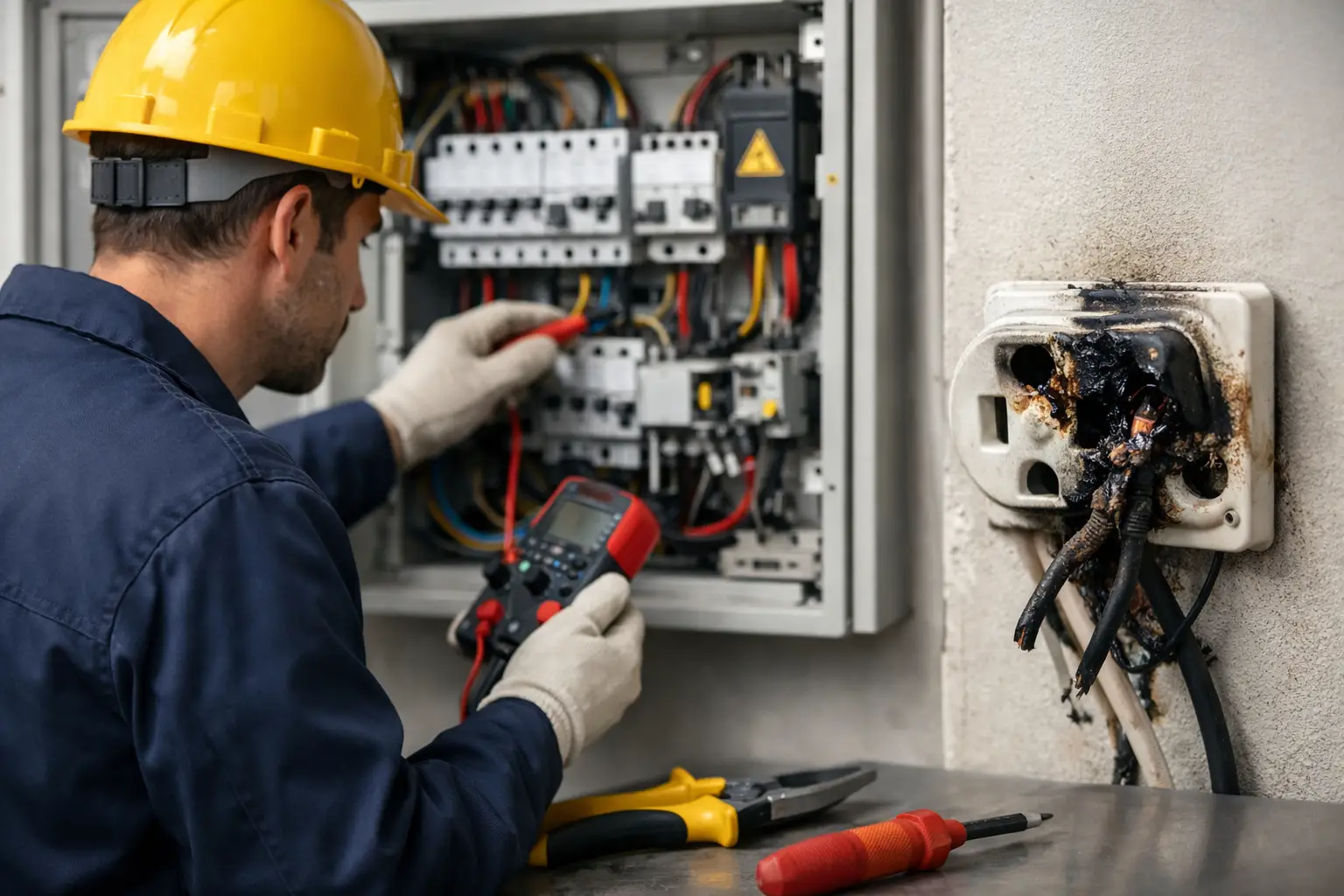
That flickering hallway light, the power point that feels warm, the switchboard that trips when the kettle and toaster are on at once – older homes have a way of telling you when the electrical system is falling behind. Electrical upgrades for older homes are not just about adding a few extra outlets. They are often about making the home safer, more practical for modern living, and better prepared for future renovations or appliances.
Across Sydney’s North Shore and Northern Beaches, many homes were built in a different electrical era. Families now run air conditioning, larger kitchen appliances, home offices, entertainment systems, EV chargers and smart devices through wiring that may have been designed decades earlier. Some older properties cope well with minor improvements. Others need more careful attention, especially if the switchboard, cabling or earthing has never been properly updated.
Why electrical upgrades for older homes matter
A lot of homeowners first think about electrical work when something stops working. In reality, the bigger issue is often what you cannot see. Ageing wiring, outdated switchboards and too few circuits can create safety risks long before there is an obvious fault.
One of the most common problems in older homes is limited electrical capacity. Years ago, the average household simply used less power. Today, even a modest family home may be running multiple televisions, laptops, chargers, kitchen appliances, hot water systems, air conditioning and outdoor lighting. If the original system has not kept pace, overloads become more likely.
There is also the compliance side. Modern safety standards have changed for good reason. Safety switches, proper earthing and suitable circuit protection are now expected features in a safe and reliable home. If your property still has ceramic fuses, an old fuse board or wiring that has deteriorated with age, an upgrade is often less about convenience and more about reducing genuine electrical risk.
The signs your older home may need attention
Not every old home needs a full rewire, and not every fault means a major job. Still, there are a few signs that should not be brushed off.
Frequent tripping, dimming lights, buzzing switches, discoloured power points and hot faceplates all deserve investigation. So does a shortage of outlets that forces you to rely on power boards and extension leads in everyday areas of the home. Those workarounds are common, but they are not a great long-term plan.
If you are renovating a kitchen, adding air conditioning, installing an induction cooktop or preparing for an EV charger, that is another clear moment to assess the system properly. A home can seem fine until a new appliance places extra demand on wiring and circuits that are already stretched.
Homes that still have older rubber-insulated wiring, fabric-insulated wiring or an outdated switchboard setup should be inspected by a licensed electrician. Some materials degrade over time, especially in roof spaces where heat can be harsh. What looks acceptable from the outside may not be in good condition once tested.
Start with the switchboard
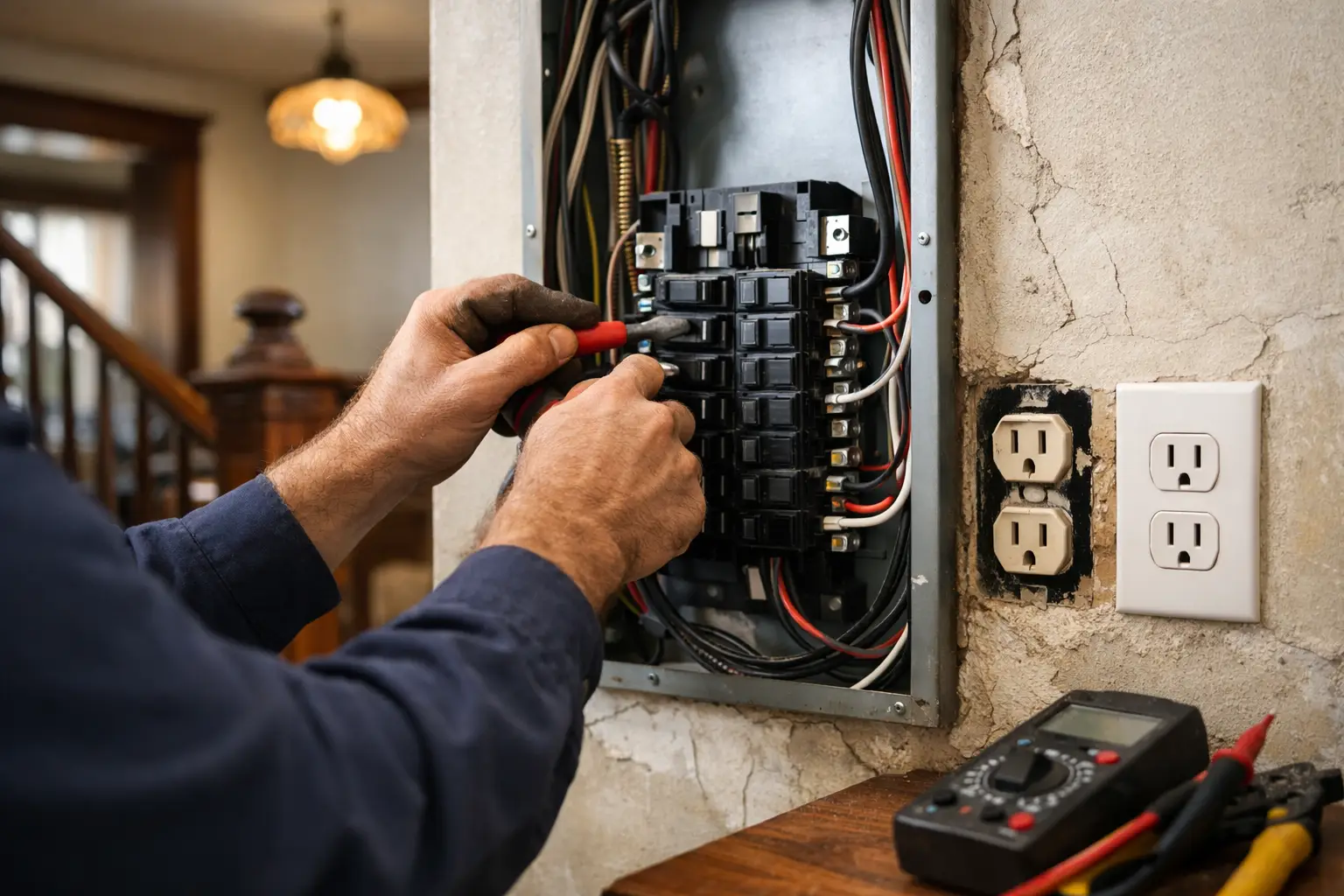
For many properties, the most valuable upgrade begins at the switchboard. If the switchboard is outdated, the rest of the system is working with a weak foundation.
A modern switchboard upgrade can improve safety, make faults easier to identify and support the power demands of a modern household. It usually includes updated circuit protection and safety switches, which are designed to cut power quickly in dangerous situations. That level of protection matters in family homes, investment properties and small commercial spaces alike.
There is also a practical benefit. An upgraded switchboard allows circuits to be arranged more sensibly, which can reduce nuisance tripping and help your electrician identify issues faster if they do arise. For homeowners planning further improvements, this often becomes the first step that makes later upgrades possible.
Rewiring: sometimes necessary, sometimes not
Rewiring is the part many people worry about because it sounds disruptive and expensive. Sometimes it is a major job. Sometimes it is more targeted than homeowners expect.
The right answer depends on the age of the property, the condition of the existing cabling and what you want the home to do. If a house has sections of ageing or unsafe wiring, partial rewiring may be enough. If the electrical system has been patched together over decades with multiple additions, a more complete rewire may be the safer and more cost-effective path.
A good electrician will not recommend a full rewire unless the condition of the installation justifies it. That is where clear advice matters. You want to know what is unsafe now, what is likely to become a problem soon, and what can reasonably wait.
In occupied homes, careful planning can also reduce disruption. Some jobs can be staged around renovations or completed area by area. It depends on access, wall finishes and the scope of work, but there is usually more than one way to approach it.
Power points, lighting and everyday usability
Not every upgrade is about fault prevention. Some are about making the house easier to live in.
Older homes often have power points in the wrong places, too few outlets in bedrooms and living areas, and lighting layouts that no longer suit the way families use the space. Adding extra power points, upgrading lighting and improving switch placement can make a noticeable difference day to day.
This is especially useful during renovations, but it is just as worthwhile in homes that are otherwise staying as they are. Wall-mounted televisions, study nooks, kitchen appliances and bedside charging all place different demands on a home than they did 30 or 40 years ago.
Lighting upgrades are also worth considering. Replacing older fittings with modern LED options can improve brightness, reduce running costs and refresh the feel of a room without major building work. In some homes, upgrading from a single central fitting to better task or layered lighting makes the space far more functional.
Planning for modern appliances and future needs
One of the biggest mistakes in older homes is upgrading only for today. If you are already opening walls, updating the switchboard or running new circuits, it makes sense to think a step ahead.
You may not be ready for an EV charger now, but if one is likely in the next few years, planning for capacity early can save money later. The same goes for air conditioning, electric hot water, smart home features or a kitchen upgrade. Good electrical planning is not about overspending. It is about avoiding repeat work.
This is particularly relevant for growing families and renovators. A house that feels electrically adequate for two people can feel very different once there are extra bedrooms in use, more devices charging and more appliances running at the same time.
Safety, compliance and insurance considerations
Electrical work in older homes should never be treated as a quick patch-up job. Compliance matters, and so does having the work carried out by a licensed electrician who understands both current standards and the quirks of older properties.
For landlords, this is even more important. Rental properties need to be safe, and electrical issues can quickly become a liability if they are ignored. For owner-occupiers, proper documentation and compliant work can also be helpful for insurance and future property sales.
The cheapest fix is not always the most economical one if it leaves underlying issues untouched. On the other hand, not every home needs the biggest possible upgrade package. A practical inspection and honest advice are what make the difference.
Choosing the right approach for your home
The best electrical upgrades for older homes are the ones that match the condition of the property and the way you actually live in it. A federation home in Mosman may have very different electrical needs from a brick unit in Dee Why or a renovated family home in North Ryde.
That is why a one-size-fits-all answer rarely works. Some homes mainly need switchboard upgrades and additional circuits. Others need substantial rewiring before any cosmetic improvements make sense. In many cases, the smartest approach is staged work – address immediate safety concerns first, then improve convenience and future capacity as budget and plans allow.
For local homeowners, trust matters as much as technical skill. You want an electrician who turns up on time, explains what they have found in plain language, keeps the site tidy and gives you a clear path forward. That service-first approach is what helps take the stress out of older home electrical work, whether it is a small upgrade or a larger safety overhaul.
If your home is showing its age electrically, it is worth getting it checked before a minor annoyance becomes a bigger problem. A careful upgrade now can give you a safer home, smoother daily use and one less thing to worry about later.