You notice it at night first. The kitchen downlights dip for a second when the ducted air con kicks in, or the bathroom light gives a quick flutter that seems too small to worry about. If you’ve been asking, why are my lights flickering, the answer can range from a simple bulb issue to a wiring fault that needs urgent attention.
The key is context. A single flickering light is usually a different problem from multiple lights flickering across the house. And if the flicker is getting worse, happening often, or showing up alongside buzzing, burning smells or tripping circuits, it’s time to take it seriously.
Why are my lights flickering in one room?
If the problem is limited to one fitting or one room, the fault is often local rather than house-wide. That’s the good news, because local faults are usually easier to trace.
A loose globe is one of the most common causes. Even a slightly poor connection can make the light pulse or cut in and out. This happens a lot with older fittings, recently changed globes, or lights in areas with vibration, such as near a door that gets slammed regularly.
LED compatibility is another big one in Australian homes. If you’ve upgraded to LED downlights or LED globes but kept an older dimmer switch, the light may flicker because the dimmer and the lamp are not designed to work together. Low-quality LED products can also be inconsistent, especially if they’re being used in enclosed fittings or hot ceiling spaces.
Then there’s the fitting itself. A worn lampholder, failing driver in an LED fitting, or a loose terminal connection can all cause intermittent flickering. In these cases, changing the globe may not solve the issue for long.
When flickering lights point to a bigger electrical issue
If multiple lights flicker at the same time, or you notice changes throughout the property, the issue may be further back in the circuit or switchboard.
Voltage fluctuation is one possible cause. Some variation can happen when large appliances start up, especially older air conditioners, pool equipment, fridges or pumps. A brief dip once in a while may not mean there’s a serious fault. But if your lights dim noticeably every time an appliance runs, or the flickering has become a pattern, it should be checked.
Loose connections are more concerning. A loose neutral, deteriorated wiring connection, or faulty breaker can cause lights to flicker unpredictably. These faults can create heat, and heat inside electrical connections is never something to ignore.
Older homes across the North Shore and Northern Beaches can be more prone to this, particularly if parts of the electrical system have been added to over time. Renovations, old switchboards, mixed generations of wiring and increased power demand from modern appliances can all expose weaknesses that were not obvious years ago.
Why are my lights flickering when appliances turn on?
This is one of the most common questions electricians get, and the answer is often load-related. Appliances with motors or compressors draw extra current when they start. That includes air conditioning systems, refrigerators, washing machines and some exhaust fans.
A slight momentary dimming can be normal, particularly in older properties. What matters is how strong it is and how often it happens. If lights are dipping hard, flickering repeatedly, or recovering slowly, that can suggest the circuit is overloaded, the appliance is drawing more than it should, or the electrical system is struggling to keep up.
This is also where switchboard condition matters. Older boards may not be suited to the way modern households use power now, especially if you’ve added induction cooking, EV charging, home office equipment or a renovation without a broader electrical upgrade.
LED lights flickering after a recent upgrade
A lot of homeowners notice flickering after replacing halogens with LEDs. The assumption is often that the new lights are faulty, but that’s not always the case.
LEDs are more sensitive to installation quality, dimmer compatibility and driver performance. If the wrong dimmer is left in place, or if the minimum load requirements are not met, the lights can strobe, shimmer or flicker at certain brightness levels. In some homes, the issue only shows up at night or when several fittings are dimmed together.
Poor-quality LED products can also fail early, particularly in warm roof cavities or bathrooms with higher moisture levels. This is one reason professional supply and installation often saves hassle in the long run. The cheapest option on the shelf is not always the most reliable once it’s in your ceiling.
Signs your flickering lights need urgent attention
Not every flicker is an emergency, but some warning signs should move the job to the top of your list.
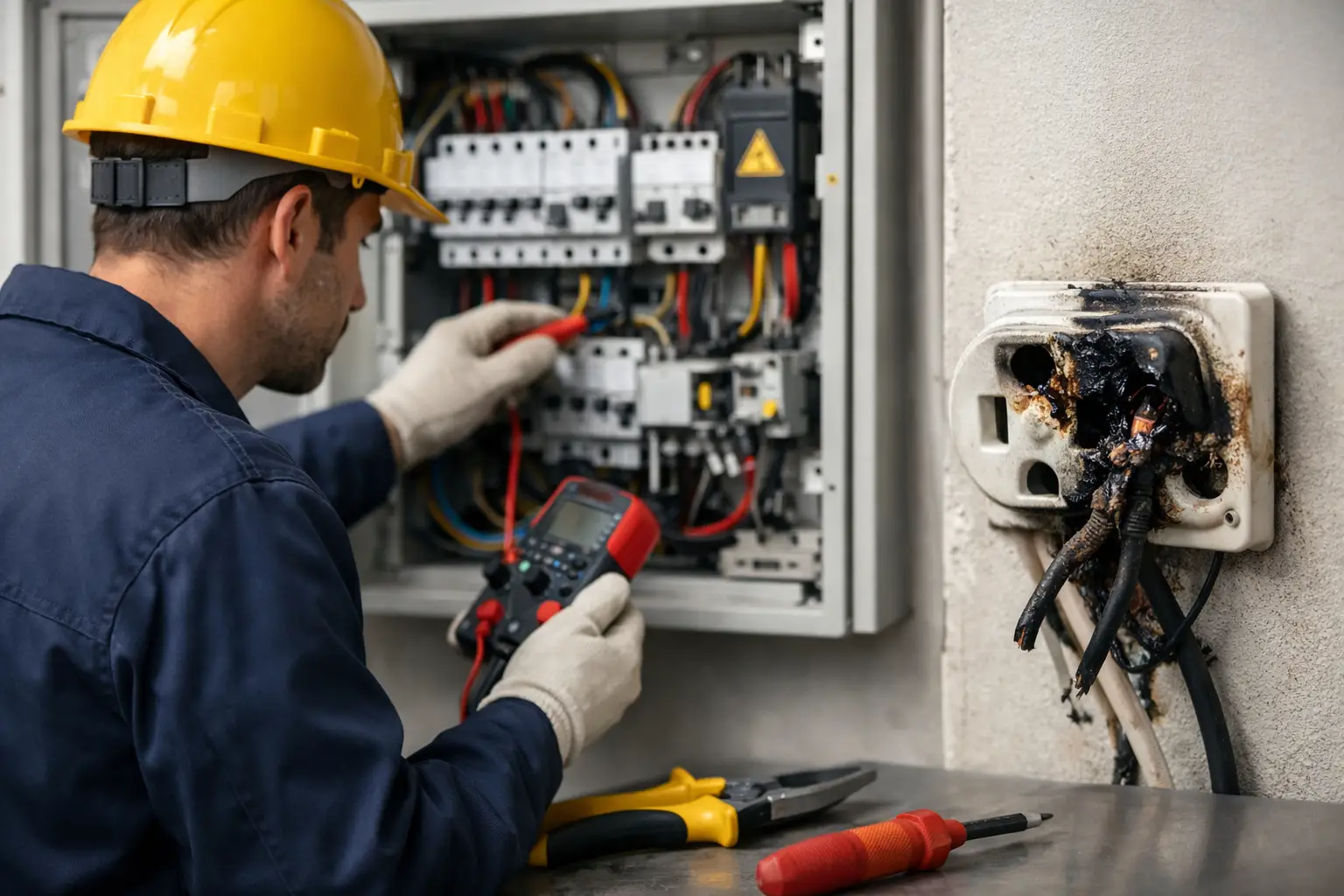
If the lights flicker along with a buzzing sound from a switch, fitting or switchboard, stop using that circuit if you can. The same goes for a burnt smell, discoloured switches, warm power points, or a breaker that trips repeatedly. These are signs the issue may involve heat damage or arcing.
You should also act quickly if the flickering affects several rooms, happens randomly without any appliance turning on, or started after storm activity, water ingress or renovation work. In those cases, guessing is not worth the risk.
For landlords and commercial property managers, flickering lights should also be treated as a maintenance issue with safety implications, not just an inconvenience. Tenants and staff notice poor lighting straight away, but the bigger concern is what’s happening behind the fitting or at the board.
What an electrician will usually check
A proper diagnosis starts with narrowing down where the fault sits. Is it the globe, the fitting, the switch, the circuit, the switchboard or the supply coming into the property?
An electrician will usually test the affected light fittings, inspect switches and connections, and look for signs of overheating or deterioration. If the problem appears broader, they may check the switchboard, circuit loading and voltage behaviour under use.
This matters because replacing a globe might hide the symptom without fixing the cause. If there’s a loose termination in the fitting or board, the flickering can return – and potentially worsen.
For homes with older switchboards, ceramic fuses or a history of piecemeal electrical work, the inspection may reveal that the flickering is part of a larger upgrade conversation. That doesn’t always mean a full rewire is needed. Sometimes the right repair is quite targeted. But you want a clear answer based on testing, not guesswork.
Can you fix flickering lights yourself?
There are a few safe checks you can make. If it’s a standard globe and the fitting is cool and accessible, you can see whether the globe is loose or try a known good replacement. You can also pay attention to patterns – whether it happens only on one switch, only when dimmed, or only when an appliance starts.
Beyond that, electrical faults are not a DIY job. In NSW, fixed wiring and electrical repairs must be handled by a licensed electrician. Even what seems like a minor issue can involve live parts, damaged insulation or faulty connections hidden in the ceiling or wall.
The practical rule is simple: if changing the globe doesn’t solve it, or if more than one light is involved, book it in.
Why are my lights flickering in an older Sydney home?
In older parts of Sydney, flickering lights are often tied to ageing infrastructure. That can mean brittle insulation, worn fittings, outdated switchboards or circuits that were designed for a very different era of power use.
A house that once ran a few lights, a fridge and a television may now be powering air con, chargers, security systems, smart home gear, bigger kitchen appliances and work-from-home setups. The system might still be operating, but not comfortably.
That doesn’t mean every older home is unsafe. Many are solid homes with a lot of life left in them. It just means electrical systems need to be assessed based on current demand, not the standards of decades past.
For local homeowners, the value of getting flickering lights checked is not only safety. It’s peace of mind. You want to know whether it’s a simple lamp issue or something in the wiring that could become a bigger repair later. A licensed local electrician can give you a straight answer, explain what’s actually happening, and sort it properly without fuss.
If your lights are flickering, don’t wait for the problem to make the decision for you. Small electrical faults have a habit of becoming bigger ones at the worst possible time.