You reset the switchboard, the power comes back on, and ten minutes later it trips again. If you’re asking, why does my circuit breaker trip, the short answer is that the breaker is doing its job. It’s designed to cut power when something on that circuit becomes unsafe, whether that’s an overload, a fault, or a problem with the breaker itself.
That can still be frustrating, especially when it keeps knocking out the kitchen, home office, air con, or lighting at the worst possible time. In homes and small businesses across Sydney’s North Shore and Northern Beaches, repeated tripping is usually a sign that something needs proper attention rather than another quick reset.
Why does my circuit breaker trip in the first place?
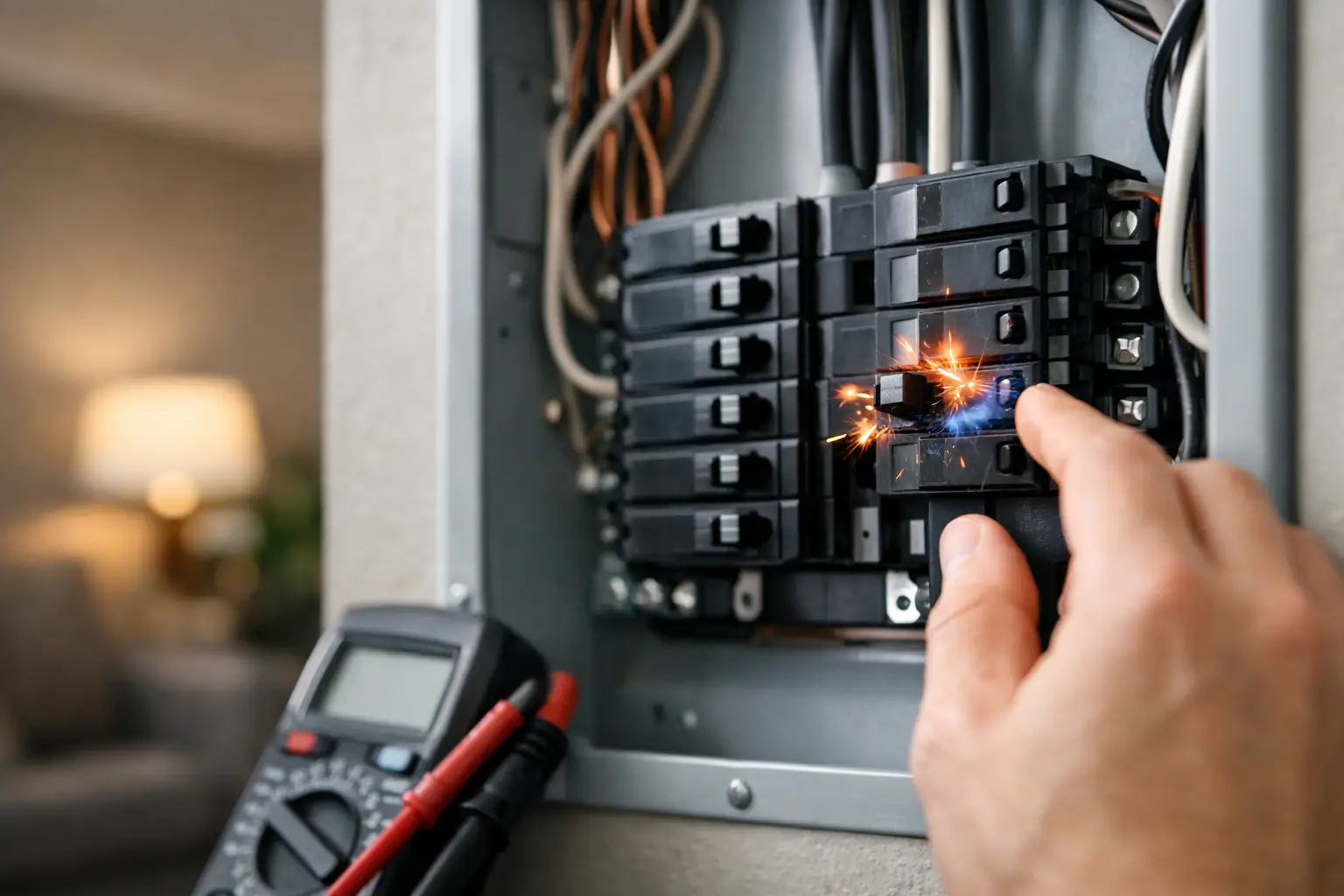
A circuit breaker is a safety device inside your switchboard. It monitors the electrical load on a circuit and disconnects power if the current rises above safe limits or if it detects a fault. That helps reduce the risk of overheating, electric shock, and electrical fire.
In practical terms, tripping means the breaker has noticed something abnormal. Sometimes the cause is simple, like too many appliances running at once. Other times, it points to deteriorated wiring, a faulty appliance, moisture getting where it shouldn’t, or an outdated switchboard that no longer suits the way the property is used.
The reason matters because the fix is different in each case. Resetting the breaker might get things going again, but it doesn’t solve the underlying issue.
The most common causes of a tripping breaker
Overloaded circuits
This is one of the most common reasons a breaker trips in older homes and busy family households. An overload happens when too many high-draw appliances are running on the same circuit at once. Think kettle, toaster, microwave and dishwasher all competing in the kitchen, or heaters, hairdryers and power boards all used together in bedrooms or living areas.
Modern living puts more pressure on electrical systems than many homes were originally designed for. Extra fridges, gaming setups, home offices, EV chargers and ducted air conditioning all add demand. If a circuit is carrying more current than it was designed to handle, the breaker trips to prevent overheating.
If the trip only happens when several appliances are used together, overloading is a strong possibility.
Faulty appliances
Sometimes the issue isn’t the circuit itself. It’s one appliance plugged into it. A damaged toaster, ageing fridge, faulty washing machine or even a mobile charger can cause a breaker to trip if there’s an internal fault.
This can be tricky because the appliance may still appear to work. You might only notice the breaker trips when that item is switched on, or after it has been running for a few minutes. Heating appliances are common culprits because wear and tear inside the unit can create short circuits or earth leakage.
A good clue is timing. If the breaker trips every time a specific appliance is used, stop using it until it has been checked or replaced.
Short circuits and wiring faults
A short circuit happens when active and neutral conductors come into contact in a way they shouldn’t. When that happens, the current spikes very quickly and the breaker trips almost instantly.
Short circuits can be caused by damaged appliance leads, loose connections, worn insulation, rodent damage, or electrical work that has deteriorated over time. In some cases, faults are hidden in the wall, ceiling or under the floor, which is why repeated unexplained tripping should never be ignored.
If the breaker snaps off immediately after resetting, especially with a sharp click and no clear appliance trigger, a wiring fault may be involved.
Earth leakage or safety switch issues
Not every tripping device in a switchboard is a standard breaker. Many switchboards also include safety switches, also called RCDs, which trip when electricity leaks to earth. That type of trip is about shock protection rather than just overload protection.
Moisture, damaged cables, outdoor lighting faults, faulty hot water systems and ageing appliances can all cause earth leakage. In coastal suburbs on the Northern Beaches, salt air and moisture can also contribute to corrosion over time, particularly in outdoor fittings or exposed areas.
If a safety switch keeps tripping, it’s a clear sign something needs investigation. It may be intermittent at first, then become more frequent.
Old or failing breakers
Breakers themselves can wear out. It’s less common than overloads or appliance faults, but it does happen, particularly in older switchboards. A breaker may become overly sensitive, fail to reset properly, or trip under loads it previously handled without trouble.
That said, replacing the breaker isn’t always the full answer. A licensed electrician should confirm whether the breaker is faulty or responding correctly to a hidden issue elsewhere on the circuit.
Signs it’s more than a one-off nuisance
An occasional trip after running too many appliances at once can be straightforward. A breaker that trips repeatedly, smells hot, makes buzzing sounds, or affects multiple areas of the property is different.
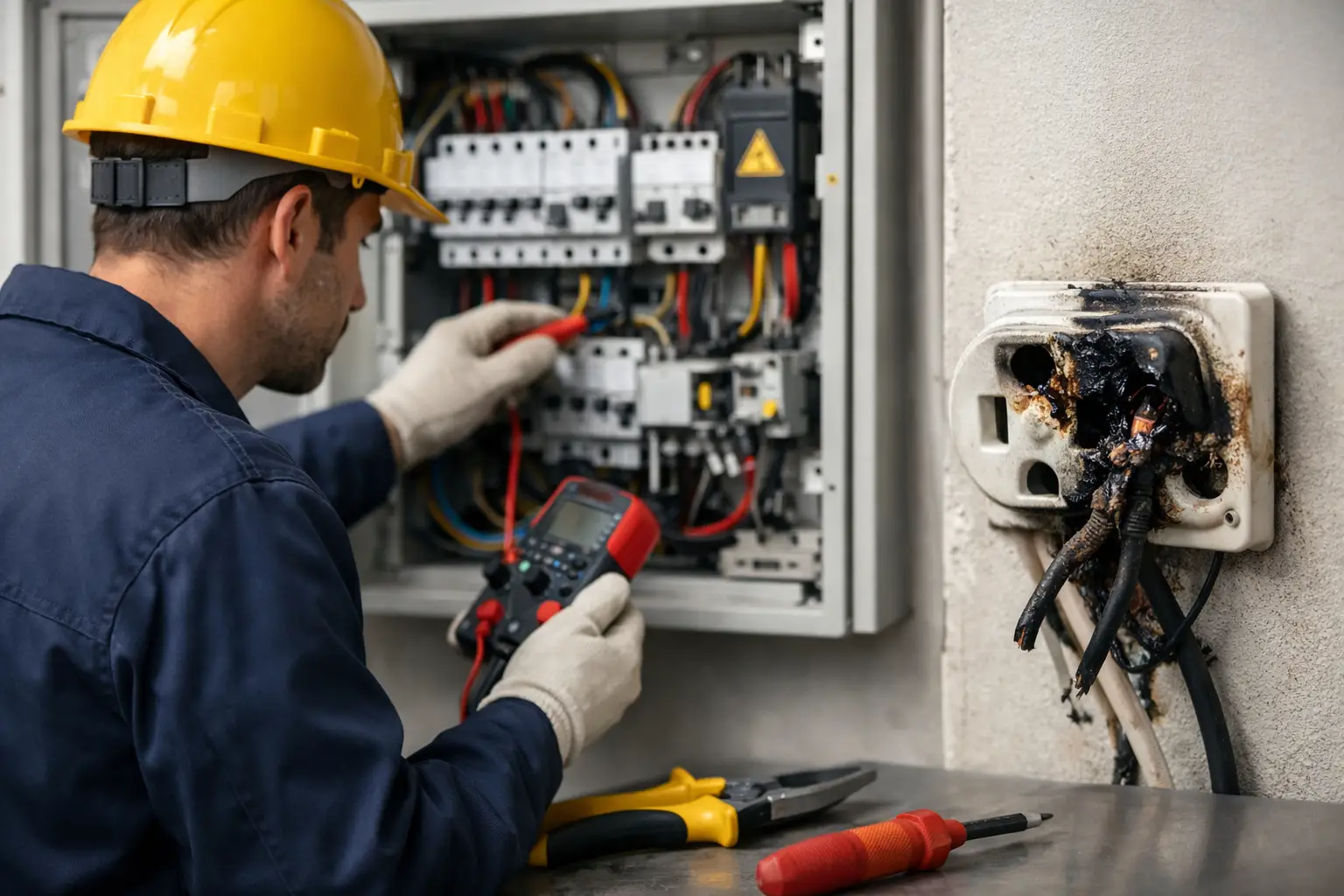
You should take it seriously if the switchboard feels warm, lights flicker before the trip, power points look discoloured, or you’ve noticed a burning smell. Those are warning signs that the electrical system may be under stress.
For landlords and business owners, repeated tripping also creates a practical issue beyond safety. It disrupts tenants, staff, refrigeration, internet equipment and day-to-day operations. What starts as an annoyance can quickly become downtime and risk.
What you can safely check yourself
There are a few sensible checks you can do before calling an electrician. Turn off and unplug appliances on the affected circuit, reset the breaker once, then reconnect items one at a time. If the trip happens after plugging in a particular appliance, that gives a useful clue.
You can also notice patterns. Does it trip only during heavy kitchen use, when the heater is on, during rain, or when outdoor lighting runs? Details like that help narrow down the cause.
What you should not do is keep forcing the breaker back on, open the switchboard beyond normal switching, or attempt your own electrical repairs. In Australia, electrical fault finding and repairs must be carried out by a licensed electrician.
When to call a licensed electrician
If the breaker trips more than once without an obvious explanation, it’s time to book an inspection. The same goes if it won’t reset, trips instantly, or affects essential equipment such as your hot water, cooktop, or business systems.
A licensed electrician can test the circuit, inspect the switchboard, identify whether the issue is overload, earth leakage, appliance-related or wiring-related, and recommend the right fix. That might mean repairing a fault, replacing damaged outlets, separating overloaded circuits, or upgrading the switchboard if the installation is no longer suitable for current demand.
For many Sydney homes, especially older properties that have had piecemeal additions over the years, the long-term fix is often about bringing the system in line with how the home is actually used now. Renovated kitchens, added air con, home offices and EV charging all change the electrical load. If the switchboard hasn’t kept up, tripping can become more common.
Why a proper fix matters
A tripping breaker is inconvenient, but the bigger issue is what it may be preventing. Breakers trip to stop wiring and equipment from reaching unsafe temperatures or exposing people to electric shock. If there’s a recurring problem, the system is telling you not to ignore it.
A professional diagnosis also saves time and money in the long run. Guesswork often leads people to replace the wrong appliance, live with an unreliable circuit, or keep resetting a fault that could worsen over time. A clear assessment gives you a safer, more reliable outcome.
At Bright Choice Electrical, this is exactly the sort of issue we help local homeowners and businesses sort out properly – with clear communication, licensed workmanship and repairs carried out to a high standard.
If you’ve been wondering why does my circuit breaker trip, think of it less as the problem and more as the warning system. It’s there to protect your property. The helpful next step is finding out what it’s trying to tell you before a small electrical issue turns into a bigger one.